
To affinity and beyond! How our preference to be among similar people interacts with our social ecology
You’ve probably heard the saying, “birds of a feather flock together.” While you might know this to be true intuitively, it has also been verified by social and psychological science. The tendency for people to prefer similarity has been studied for many years in social psychology, where it is called the ‘similarity-attraction effect’ (Byrne, 1971; 1997). Sociologists also study a similar concept, which they refer to as ‘homophily,’ and ‘homogamy’, or ‘assortative mating’ in the case of mate selection (Mare 1991). Psychologists who study similarity-attraction and sociologists who study homophily are for the most part interested in the same questions: Why and how do similar people end up clumping together. However, the ways they approach the topic tend to differ: Psychologists tend to consider micro-level personal preferences (e.g., Do people actually prefer similar people to dissimilar people for friends?), and sociologists tend to look at the end result of similar people grouping together or marrying one another in society at large (e.g., Do similar people tend to live in the same places, and if so, what does this mean for society?). In this article we (a psychologist and sociologist) combine psychological and sociological perspectives to think about how preferences for similarity can interact with social-ecological factors such as relational mobility (the number of opportunities there are for people to form new and end old relationships) and residential choice (the ability for people to choose where they live) to create different outcomes, both for relationships and for society at large.
Cultural differences in similarity between friends, and the importance of mobility
Just how do we know that people have a preference for similarity, and how pervasive is it? Classic research in psychology has used a method called the ‘bogus stranger paradigm’ (Byrne, 1971) to examine the impact of similarity on how much participants report liking a stranger in the laboratory. Typically, participants in these studies will be shown the responses of a survey purportedly filled out by a stranger they will allegedly meet. In fact, the stranger does not exist, and the survey responses were systematically generated with similarity to the participant’s own responses. Studies using the bogus stranger paradigm have shown that increasing the level of similarity between oneself and the bogus stranger makes it more likely that the participant would want to meet and befriend the stranger.
Sociologists, in turn, have found a great deal of evidence demonstrating that similar people do tend to ‘flock’ together on a societal level (Mare, 1991; McPherson, Smith-Lovin & Cook, 2001). People are more likely to befriend, marry, and live in neighborhoods with people who are similar to themselves, especially in terms of their income, political ideologies, and level of education.
So just how pervasive is this preference for similarity? It turns out that people around the world, from both Western and non-Western countries, show a preference for similarity in bogus stranger paradigms (Byrne et al., 1969; Fujimori, 1980; Gudykunst & Nishida, 1984; Okuda, 1996; Porwal & Jain, 1985; Yabrudi & Diab, 1978). Even chimpanzees, our close primate cousins, tend to spend more time with others who have similar personalities (Massen & Koski, 2014)! It seems that, broadly speaking, people (and chimps) who have things in common really do seem to gravitate toward one another.
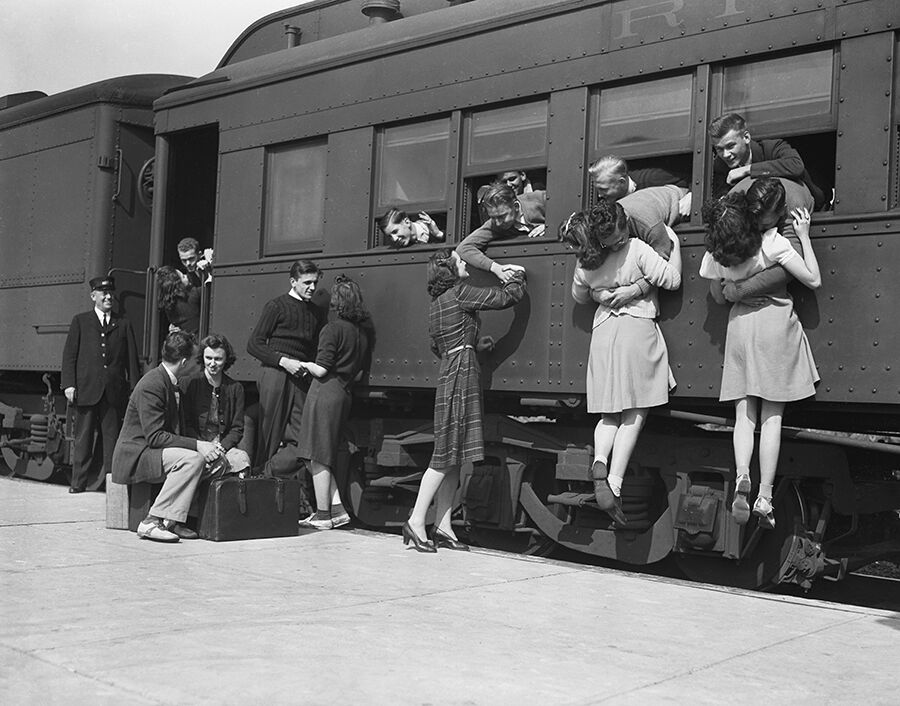 Image courtesy of Dementi Studio (http://www.dementi.com), Richmond, VA.Even though people around the world seem to generally prefer similarity in people they spend time with, at the same time other studies show that there are substantial cultural differences in just how likely people are to actually end up in relationships with similar others. For instance several studies have found that East Asians tend to have friends who are less similar to themselves compared to North Americans (Igarashi et al., 2008; Satterwhite, Feldman, Catrambone, & Dai, 2000; Uleman, Rhee, Bardoliwalla, Semin, & Toyama, 2000), leading some to wonder whether the similarity-attraction effect exists in Japanese culture at all (Heine, Foster, & Spina, 2009). How could it be that, even though people all around the world supposedly prefer similarity, people in Japan aren’t choosing similar friends?
To explain this apparent puzzle, Schug Yuki, Horikawa, and Takemura (2009) proposed that cultural differences in self-friend similarity could be explained not as a result of cultural differences in the preference for similarity (although cultural differences in the extent of this preference may occur), but rather by relational mobility, or the opportunities that societies provide individuals to form new relationships (Schug, Yuki & Maddux, 2010; Yuki & Schug, 2012). So, even if you prefer to become friends with someone like you, if you live in a society with low relational mobility you might end up choosing your friends based on who is available, rather than based on your personal preferences. And, a number of studies have found that relational mobility tends to be a lot lower in Japanese society than it is in North American society (See Yuki & Schug, 2012 for a review). So, breaking with the tradition of psychologists (who tend to think more about individual preferences than about social context, more typically in the realm of sociology), the researchers suspected the difference in similarity between friends in North America and Japan might be due to differences in the society, rather than underlying cultural differences in individual preferences.
article author(s)

Joanna Schug
Joanna Schug is an Assistant Professor in the Psychology department at the College of William and Mary. She received her Ph...more

Philip S. Lu
Philip S. Lu is a Ph.D. candidate at the Department of Sociology at the University of California Los Angeles. He specializes in social...more