
Grasping the grounded nature of mental simulation
Neuroscientific evidence of mental simulation
Despite a longstanding debate regarding whether sensory images exist in the brain in a modal manner (see Kosslyn, Ganis, & Thompson, 2001 for a brief review), recent neuroscience evidence provides overwhelming support for the notion that the same brain areas are active during actual perception are active during imagery of a sensory experience. Using brain-imagining technology (e.g., functional magnetic resonance imaging, fMRI), researchers have explored the activation of different brain areas during perception and conscious forms of imagery. The mapping of neural activity between perception and conscious imagery is not a one-to-one relationship; however, the overlap is significant and provides support that conscious imagery can be a perceptual experience.
The neuroscience literature has additionally shown that these perceptual images and their neural correlates are activated automatically, through mental simulation, in response to simply viewing pictures or reading words. For example, viewing pictures of food items (e.g., a hamburger or spaghetti) activates brain areas associated with taste (Simmons, Martin, & Barsalou, 2005). Reading words with strong smell characteristics (e.g., coffee or vomit) activates brain areas associated with smell (González et al., 2006). Additionally, mirror neuron evidence suggests that simply observing another perform actions leads to neural activity similar to oneself performing the same action (see Rizzolatti and Craighero 2004 for a review). This fMRI evidence shows that pictures and words of objects and experiences can lead to automatic mental simulations.
In addition to the behavioral evidence regarding motor simulation (Tucker and Ellis 1998, 2004), researchers have also used brain-imaging technology to examine motor simulation. For example, viewing and naming pictures of tools that can be grasped with the hand (e.g., a wrench) activated premotor areas of the brain to a greater extent than viewing and naming pictures of non-graspable items (e.g., an elephant; Chao & Martin, 2000). Grèzes and Decety (2002) replicated the findings from Tucker and Ellis (2001) and showed considerable overlap in brain activity for deliberately imagining a motor action with a tool and simply viewing a picture of the tool.
The neuroscience research provides compelling evidence for the existence of mental simulations at a more automatic level. What do these simulations ultimately mean for us in our daily lives? We next explore the applications of mental simulations, with a particular focus on consumer contexts.
Applications of mental simulation
Given the fact that people automatically mentally simulate many of the perceptual experiences in our environment, we (Elder & Krishna, 2012), as well as other researchers (e.g., Eelen, Dewitte, & Warlop, 2013; Shen & Sengupta, 2012; Ping, Dhillon, & Beilock, 2009), have sought to understand the evaluative and behavioral consequences of such simulations. Particularly, we explore the impact of mental simulations on consumer behavior within an advertising context.
One of the particularly relevant consequences of mental simulation is the likelihood of someone purchasing the product advertised. As we imagine ourselves doing something, we’re more likely to intend to perform that behavior (Anderson, 1983). We expected this increase in behavioral intention would also occur for experiences simulated at a more automatic level.
We know from prior experimental and neuroscience research that our minds simulate motor behavior, or interacting with objects with our hands at an automatic level. But what are the characteristics of stimuli (pictures) that make mental simulation more likely? Mental simulations are essentially automatic replays of prior experiences from memory. Thus, pictures that look like our everyday environment should lead to mental simulations. One simple manipulation of this concept is to have a mug with the handle pointed to the right or left. For a right-handed person, having the handle on the right should facilitate greater simulation than having the handle on the left; the converse is true for a left-handed person.
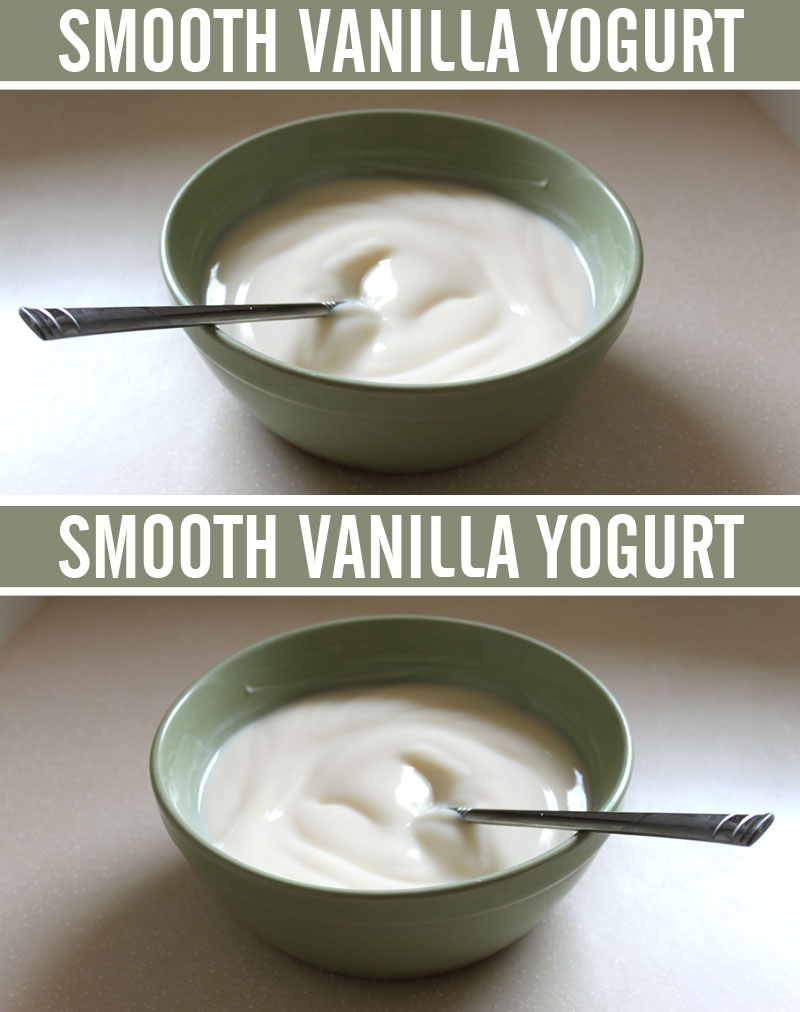 Figure 1. Example of pictures used in studiesA typical study we conducted has participants view one of two advertisements: one with the product oriented toward the right and one with the product oriented toward the left. Participants view the advertisement and then provide their purchase intentions. The basic finding across studies is that orienting the product toward the viewer’s dominant hand leads to higher purchase intentions than orienting the product toward the viewer’s non-dominant hand. For example, in one of our studies, participants viewed a picture of a bowl of yogurt. This bowl of yogurt had the spoon oriented toward either the left or right. We additionally included a control condition without a spoon. We found the orientation of the spoon mattered, with purchase intentions being significantly higher when the spoon matched the participant’s dominant hand. Such a subtle manipulation as mirroring the visual contained within an advertisement leads to important downstream consequences on behavioral intentions.
article author(s)

Ryan Elder
Ryan S. Elder is an assistant professor of Marketing at the Marriott School of Business at Brigham Young University. He received his...more

Aradhna Krishna
Dr. Aradhna Krishna is the Dwight F. Benton professor of Marketing at the University of Michigan, Ann Arbor. She runs the ...more