
The Role of Honor and Culture in Group-Based Humiliation, Anger and Shame
In their research on humiliation in the lives of Palestinians, Somalis and people from other conflict zones, Lindner (2001) and Giacaman and colleagues (2007) found that experiencing repeated humiliating acts generates trauma and high psychological distress. Victims of humiliation generally believe that the treatment they are receiving from others is intentional and undeserved (Ellison & Harter, 2007). Humiliating acts are aimed at the core identity of the person (Hartling & Luchetta, 1999), and do not only threaten self-esteem, but also the ability to belong to a group (Statman, 2000). Humiliation may be experienced in different ways: as a state of defeat or conquest in moments when people are made to believe that they are subordinated and dependent on others (Smith, 2008), as degradation when people feel being pushed down in the social hierarchy of a group, and as rejection and exclusion, when humiliating acts make people feel unworthy and not part of the social group (Statman, 2000; Smith 2008).
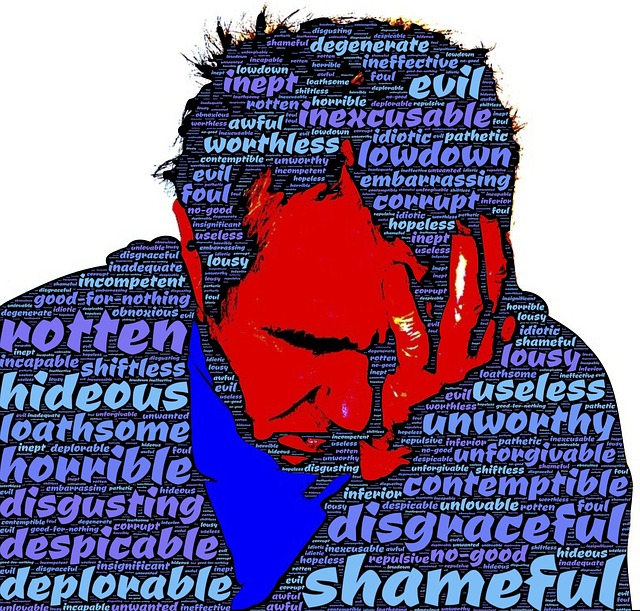
How strongly is humiliation associated with other negative emotions? Humiliation seems to include aspects of shame, embarrassment and anger (Miller, 1993; Ellison & Harter, 2007). According to Miller (1993), these emotions are similar, because they are evoked when one’s reputation and social status are threatened, and develop when there is an audience that witnesses the event. They all point to a negative perspective on one’s self, a feeling of deep pain, resulting in a desire to withdraw or shy away. However, humiliation differs from shame and embarrassment in two manners.
First, humiliation involves a stronger sense of unfairness and devaluation of self-importance by others than do shame and embarrassment (Miller, 1993). In this vein, Hartling and Luchetta (1999) argue that while humiliation is experienced when one has been unjustly downgraded, shame involves an internal negative evaluation of oneself that can occur without the embarrassment or humiliation of public judgment. Moreover, embarrassment occurs when outsiders become aware of a shame-inducing event, but humiliation is a broader, deeper sense of degradation one experiences when public ridicule takes place.
Secondly, humiliation is not only associated by a state of pain, and a desire to escape degradation, but also by a strong desire to retaliate, which is not typical of shame and embarrassment (Miller, 1993; Giacaman et.al., 2007; Lindner, E. G., 2001; Smith et al, 2002, Smith, 2008).
For instance, people could feel shame if a family member has been jailed for stealing, and embarrassment if some of the neighbors show curiosity about the reasons that pushed the relative to steal. However, people would experience humiliation if they hear the neighbors gossiping about the whole family and pointing at them when they are walking in the neighborhood.
On the other hand, concepts like other-blaming, perception of injustice and antagonistic tendencies make humiliation similar to anger. Whereas people feel anger when they believe that others have wronged them by obstructing their personal or in-group goals, people feel humiliation when the unjust behavior consists of attempts to degrade one’s personal or in-group identity. This is why humiliation includes not only anger, but also pain and shame.
Humiliation experienced after in-group derogation may lead to different types of behavioural or expressive reactions, such as conforming to the norms of dominant persons or groups, attempting to escape further humiliation, developing resistance or seeking revenge (Smith, 2008). The question is why people react differently in response to a degrading treatment? We believe that the behavioral and expressive implications of humiliation are strongly affected by the loss of honor. Since the conceptualization of honor varies with cultures and social groups, it is necessary to examine the role of honor in different cultures, in order to better understand its role in the nature of humiliation.
Why is honor so relevant?
Honor is considered an important individual value in almost every culture. Being an honorable person, coming from an honorable family, or having an honorable profession is often regarded highly. This mentality is even more strongly emphasized in societies in which individuals maintain strong interdependent relationships with each other, and the personal reputation is crucial in the social organization of the society. Honor thus not only helps the preservation of one’s self-esteem, it is also important for the balance of intergroup relationships within a community. This makes honor a value shared among individuals in a group, thus a group attribute.
Honor-oriented groups offer a specific type of membership value to their members. Group membership generally forms a big part of people’s self-concept and has a special emotional value (Tajfel & Turner, 1986). Identification with a specific group and the importance that is attributed to group membership depends on several factors. One of the most important in-group identification determinants is the centrality of group membership to the self-concept (Leach et al., 2008). In honor-oriented groups, honor seems to serve the function of centrality. It makes the group events central to the personal experience. As a consequence, when losing honor, the individual and group reactions are usually intense.
In some cultures, losing honor means losing those properties that define an individual’s social status and reputation in society (Cohen et al., 1998). In order to protect one’s honor, individuals attempt to maintain stable and fair relationships within the community. By seeking harmony and mutual respect within the community, potentially humiliating events are prevented.
article author(s)

Alba Jasini
Alba Jasini received her bachelor’s degree in clinical psychology from the University of Tirana. She has recently earned her MSc in Psychology from the...more

Bertjan Doosje
Bertjan Doosje is a Full Professor at the University of Amsterdam. He holds the FORUM-Frank Buijs Chair on Radicalization Studies. His research interests...more

Kai Jonas
Kai Jones is working as an Assistant Professor (tenured) in the Social Psychology Program group of the University of Amsterdam. In social cognition, he is...more

Agneta Fischer
Agneta Fischer has a Professorship in the department of Social Psychology on Emotions and Affective Processes at the University of Amsterdam. The general...more